Case study
What needed to work better.
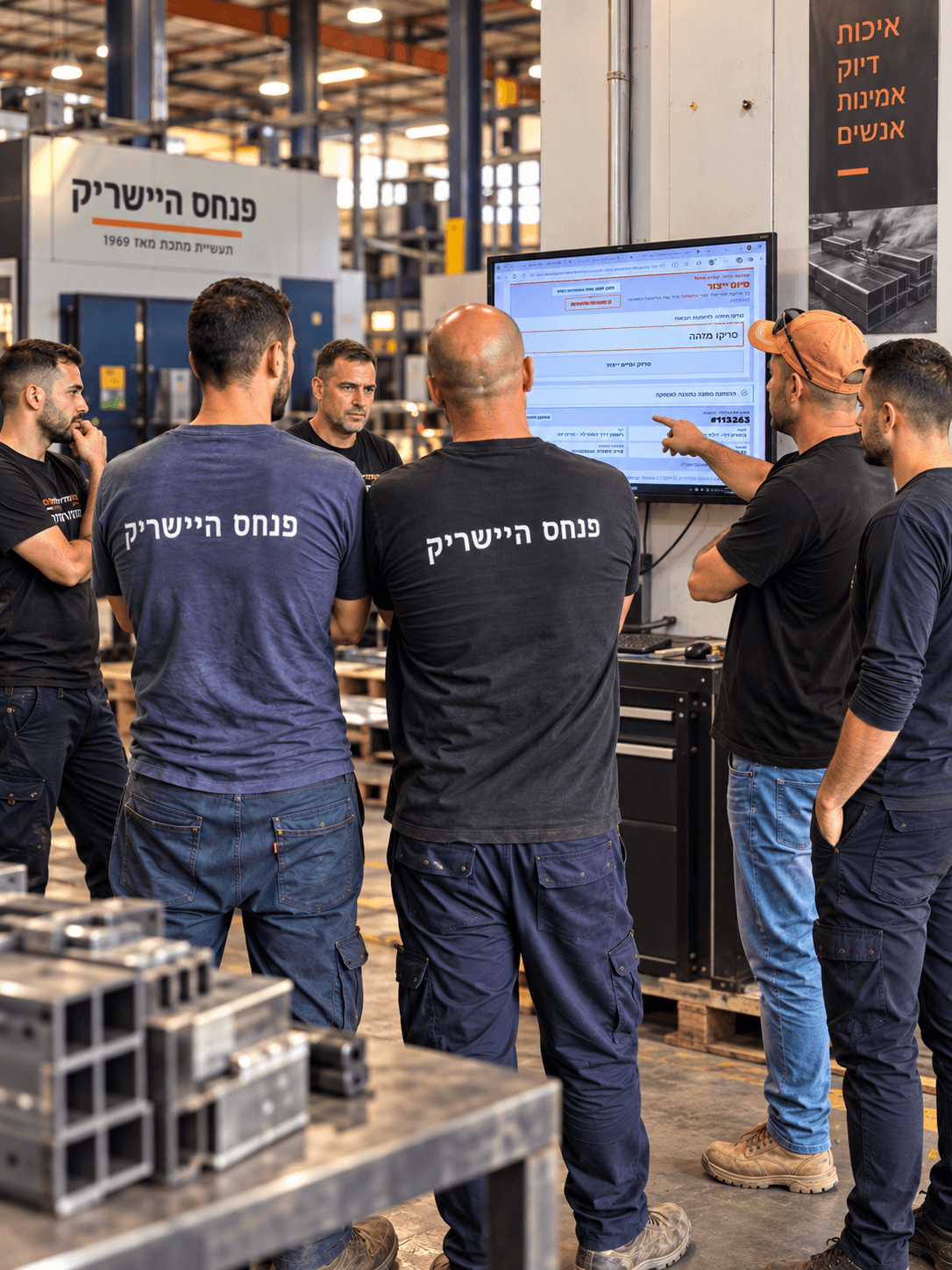
When production is complete, the system retrieves the order information and automatically routes deliveries by destination region.
01Connecting production to delivery
Finishing production is the start of the next operational step: getting the order to its destination. The project connects the factory team's completion scan with the order information held in Hashavshevet and the region where delivery is needed.
02An order and delivery tracking system
We built and implemented a system for tracking orders and deliveries, integrated with Hashavshevet. Production staff scan completed orders. The system then retrieves the associated order information and uses it to continue the delivery workflow.
03Automatic allocation by destination region
The destination determines how each delivery is grouped and routed. This allocation happens automatically after the production scan and retrieval of the order information, connecting production completion, order data and regional deliveries in one workflow.